

How to Drink in the Douro Valley
Port Wine 101: how it’s made, how to drink it, and why the Douro is worth the trip

Some people are wine experts. I’m a wine drinking expert.
I’ll never claim to know every grape varietal by heart, but I do know how to appreciate the art, agriculture, and craft that turns fruit into fermented fruit into wine.
This piece is part deep dive, part love letter to the people who made our trip to the Douro. It’s also a note to my future self for a rainy day (because I know how easily I forget what a blessed life we’ve lived). And maybe, one day, it’ll be an invitation for future generations (or even you!!) to see the valley through my eyes, plan their own trip, and remember that all of this is worth preserving.
And before we go any further, let me clarify: Port isn’t just sweet wine. By law, it isn’t even a “style.” It’s a place. To call itself Port, a wine must be made in the Douro Valley under strict regulations and shipped through Porto, Portugal. You can find Port-style wines all over the world, but only here can it carry the name.
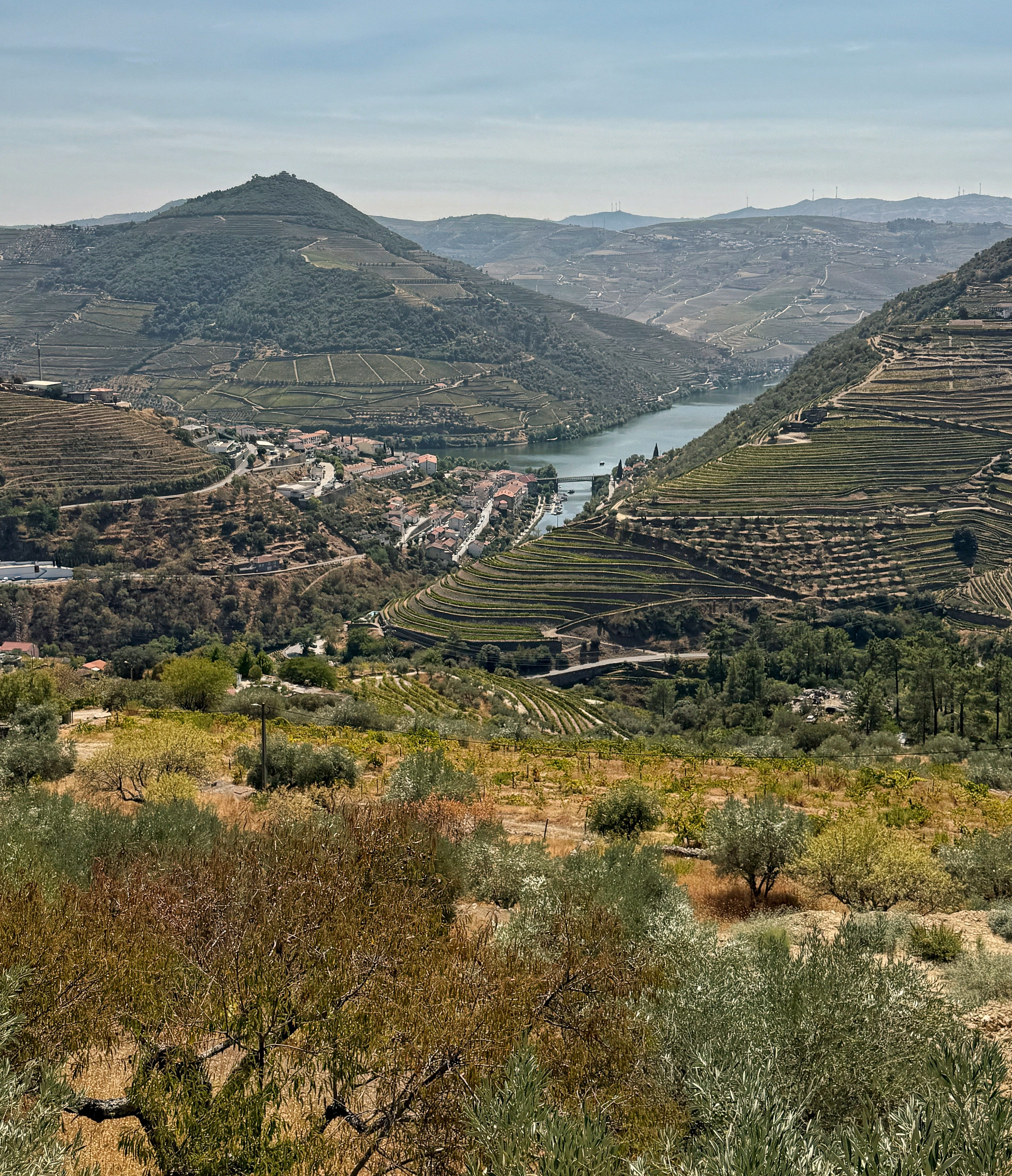
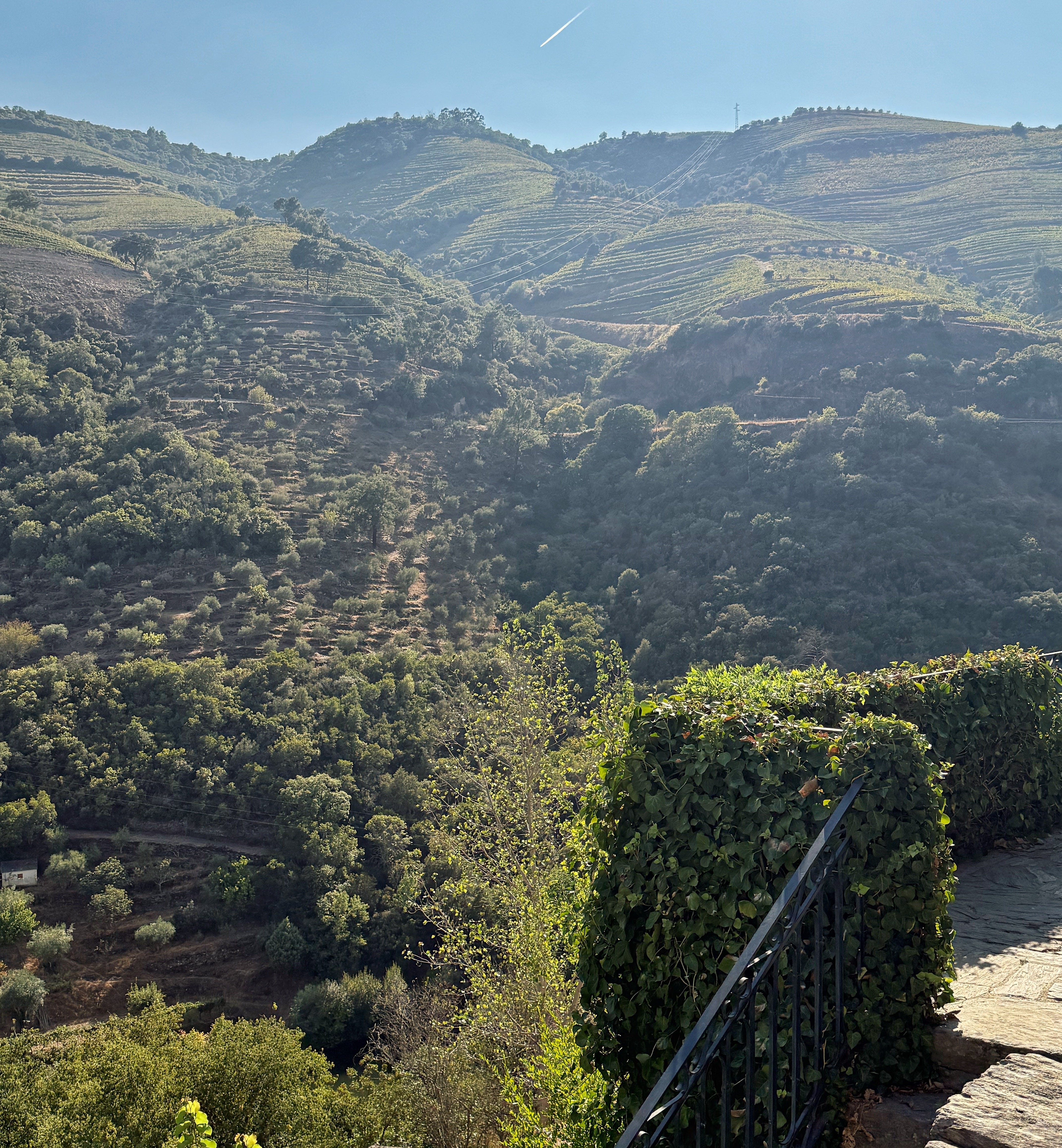
No sight compares to your first glimpse of the Douro: terraces stacked like staircases, vines clinging to impossible slopes, the river pulling everything toward Porto. This valley isn’t just beautiful — it’s where geography, history, and human stubbornness created one of the world’s most distinct wines. I promise, pictures don’t do it justice.
Inside My Douro Valley Day Trip
I didn’t know this is a hill I’d die on, but here goes nothing: if you fly across a country or an ocean (OR BOTH!) to visit a new place, there should be no “if you have extra time.” When in Porto, the Douro Valley isn’t optional. It’s a must.
We booked our adventure through a small-group TripAdvisor tour, the kind where you cross your fingers and hope the next ten hours with strangers is bearable. At first, the van chatter stayed safe: Where are you from? Did you watch the game? What do you do for work? I silently thanked God for the espresso I’d downed that morning.
Rui, the best tour guide ever, drove with one hand on the wheel, while making the van speakers spill with his Douro Valley crash course. Just exactly what I needed to understand the weight of where we were. He peppered in side jokes about us not wanting to hear his voice all day. The teacher in me could appreciate that!!
By the end of the tour, though, the 9 of us weren’t strangers anymore. We were laughing about who was in charge of the wine opener, swapping travel recs, and waving when we bumped into each other on the streets of Porto the next morning. (Small world, Jonathan & Tamira!!) The Douro has a way of turning groups into friends.
If you’re planning a trip to Porto, my full 3-day itinerary has every stop.

Morning in Amarante
Our first stop was Amarante, a small town on the Tâmega River. Rui pointed out the “invictus” bridge (famous for never being conquered) before steering us toward infamous penis-shaped pastries.
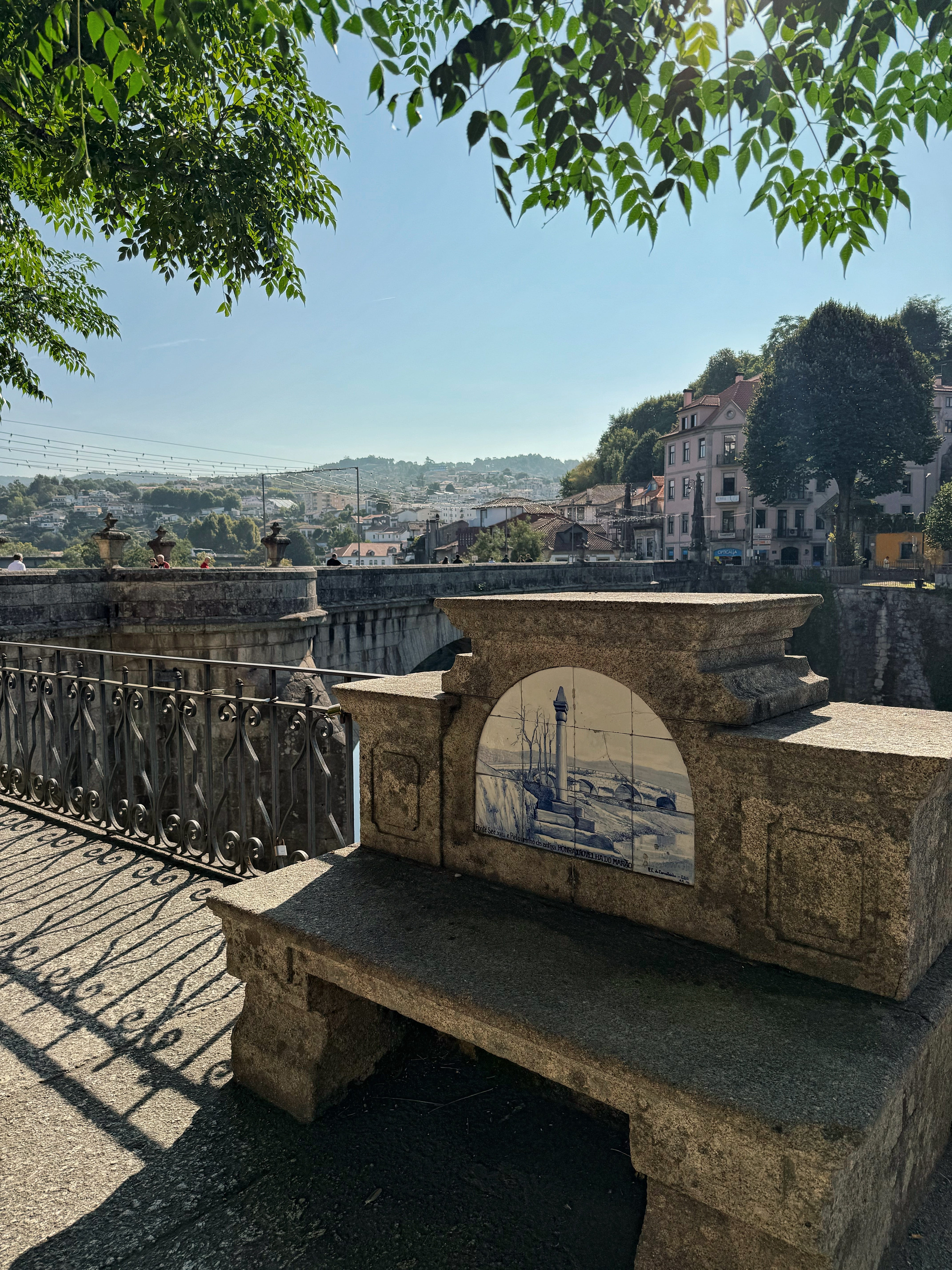
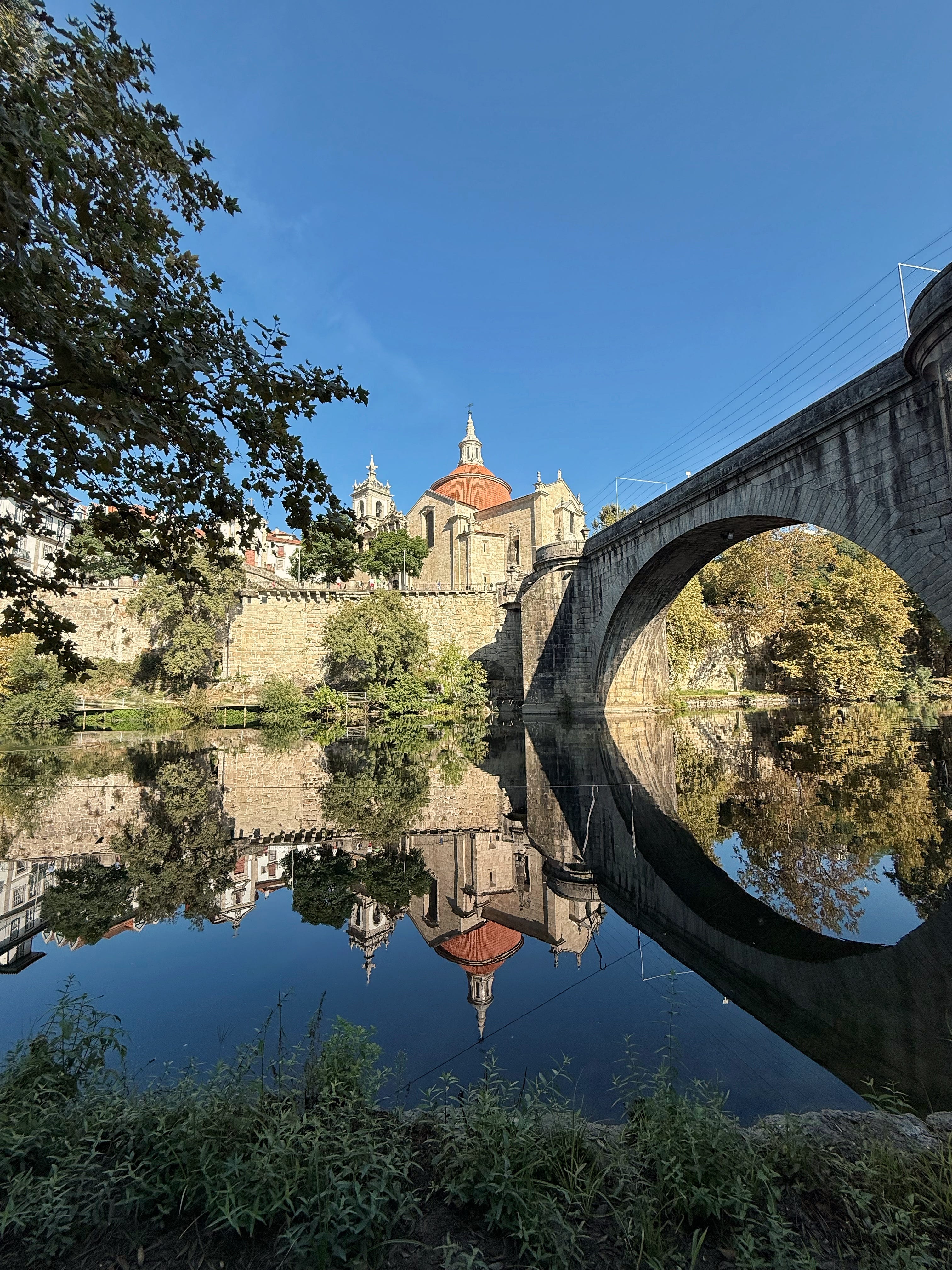
We skipped the novelty, grabbed coffee and pastries at Moinho Centro Historico, and lingered by a bay window tiled in black and white. Then, we walked along the riverside to enjoy the town’s reflection we can only hope to see again in our lifetime.
Quinta dos Mattos
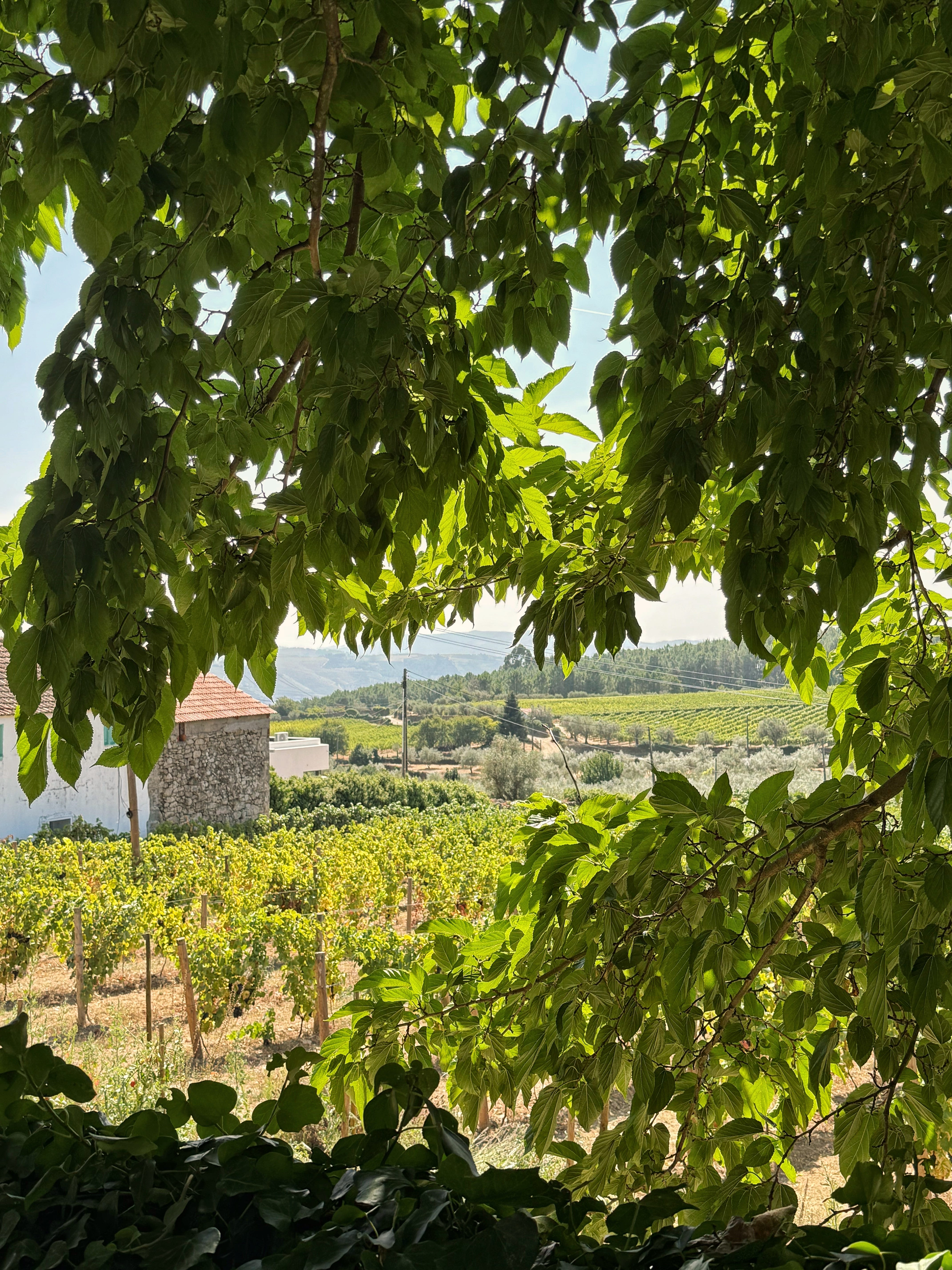
From there, the valley opened into vineyards. At Quinta dos Mattos, we stepped into a garden courtyard straight off Pinterest, framed by late-summer vines.
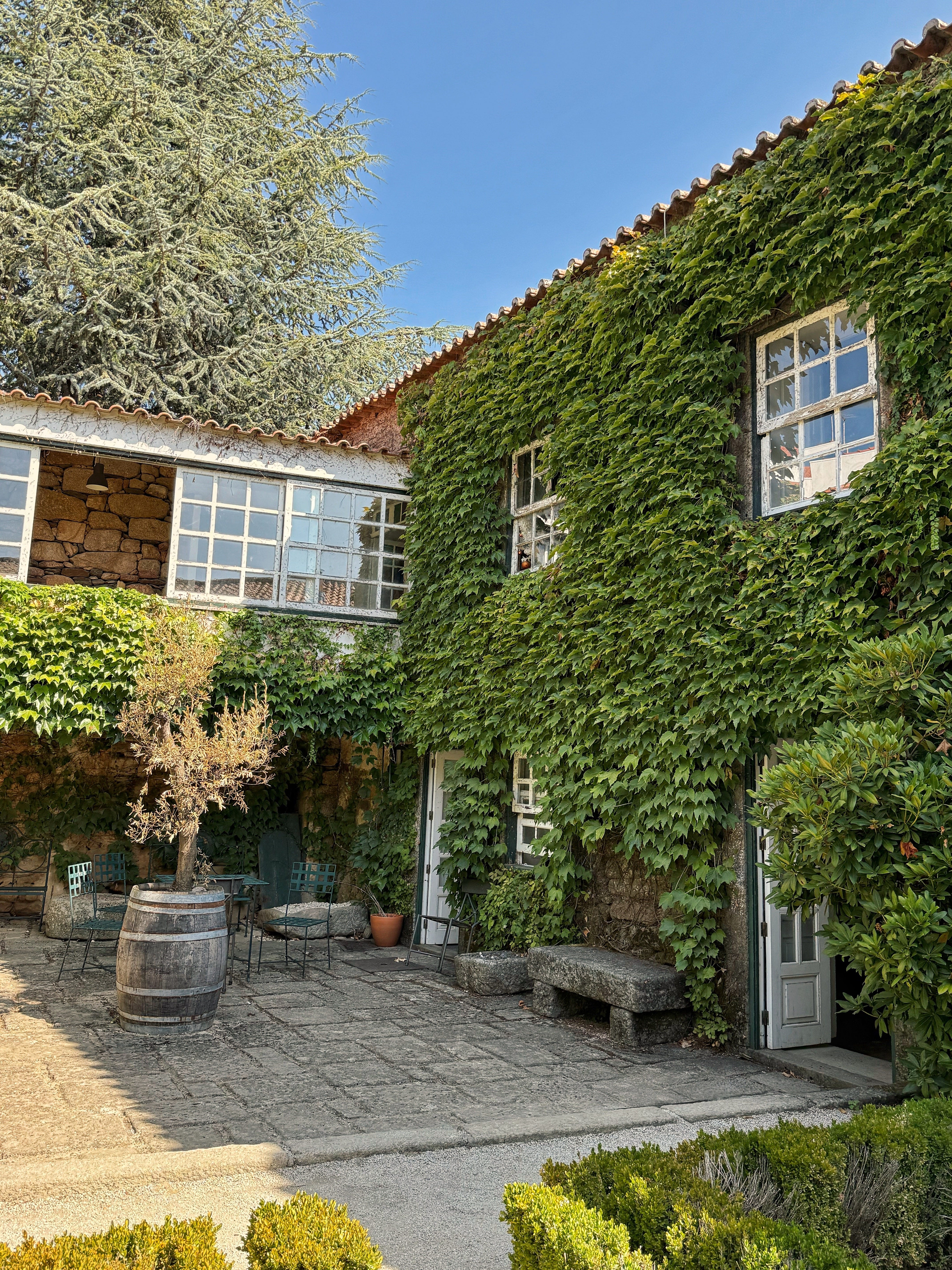
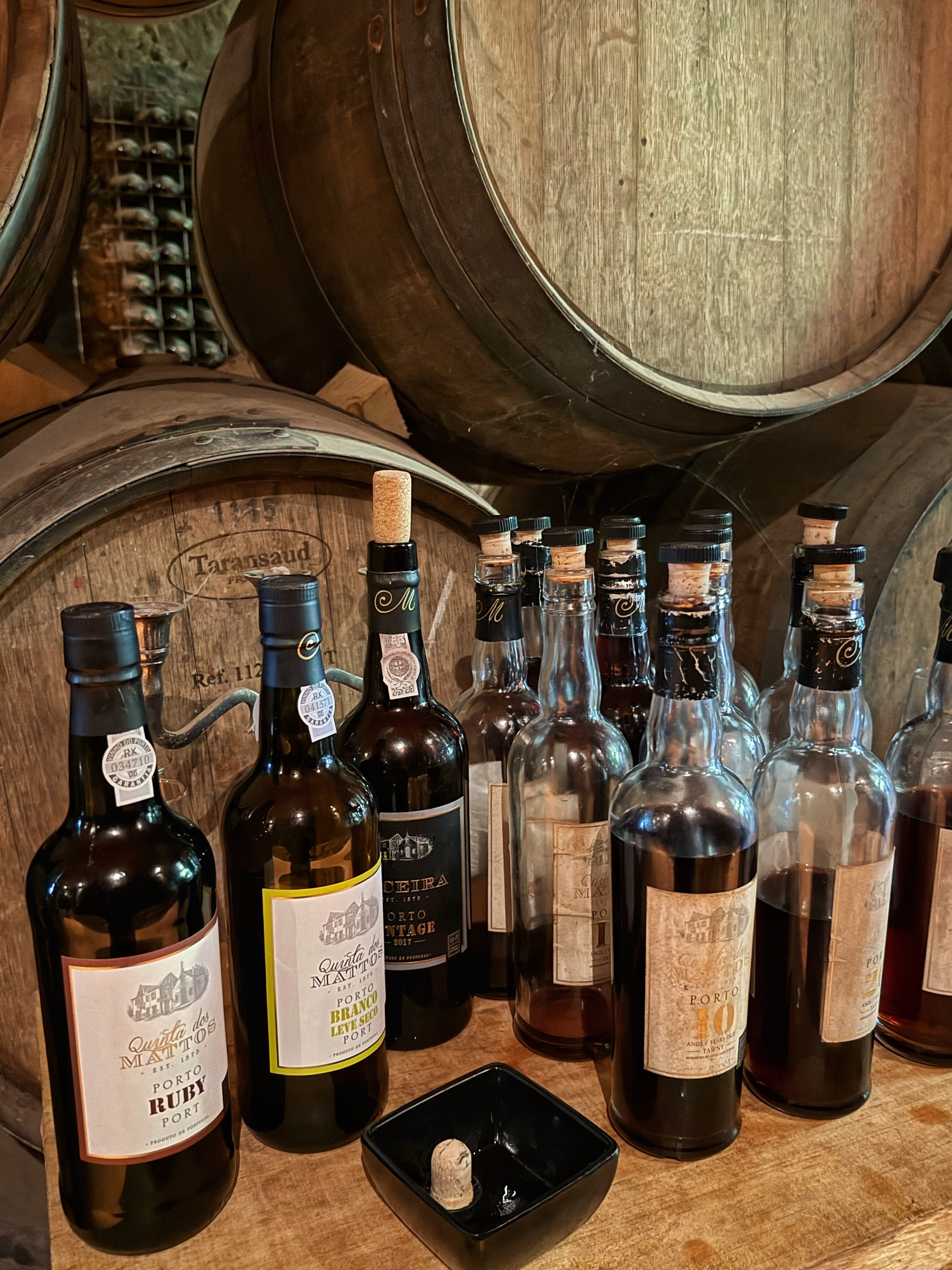
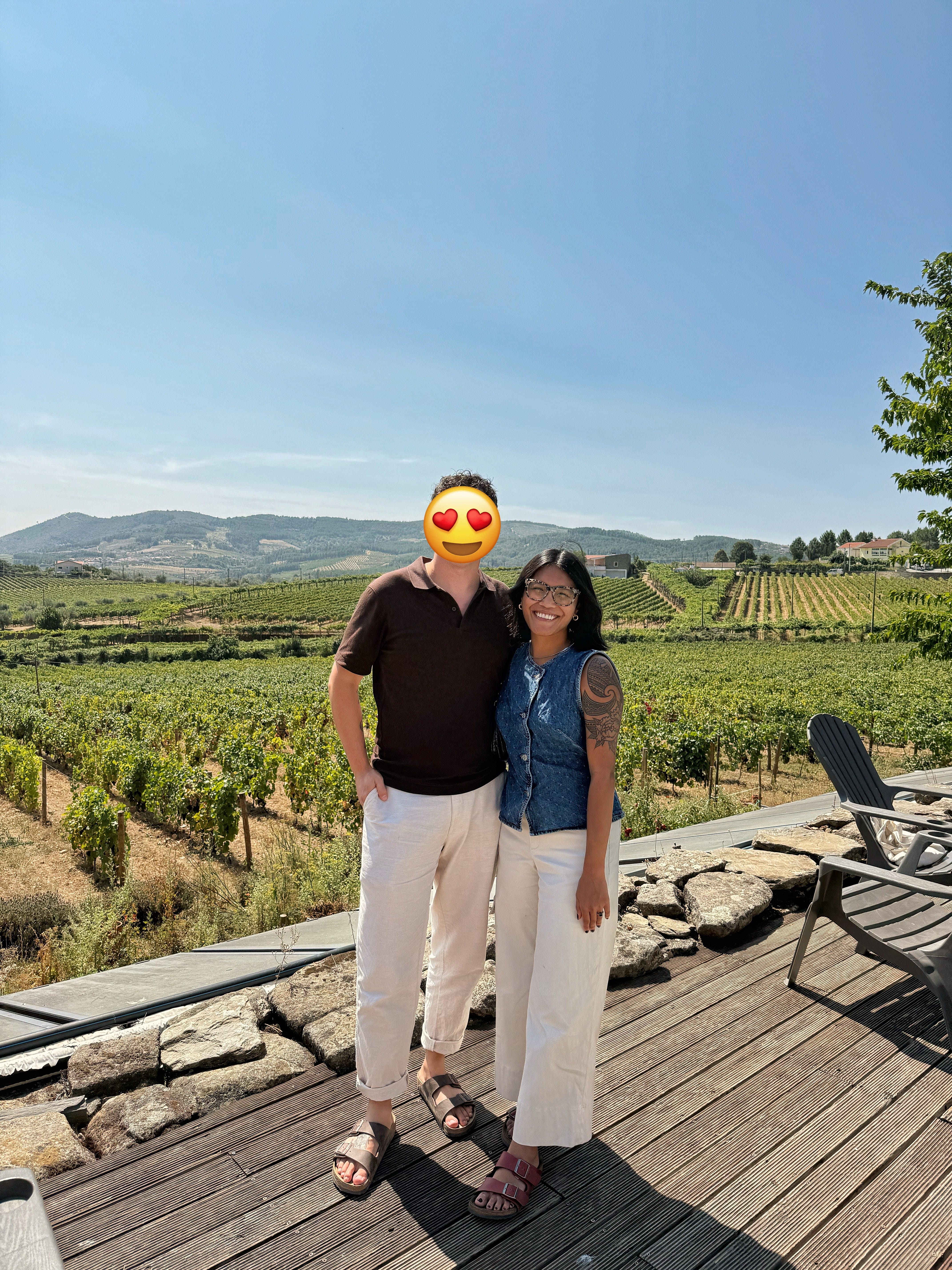
Our tawny tasting came with bread and cheese, each pour layered with time:
10 year = walnut, orange, almond
20 year = sweet caramel, vanilla
30 year - coffee, dark chocolate
We held onto our 30 year to pair with our chocolate dessert. And oh boy, it was *chef’s kiss*.
Our guide reminded us of the rule of thumb: the older the port, the pricier (and usually better). But he also shared a saying I’ll never forget:
“10 [year] on the tongue, 20 to the nose.”
Meaning: the 10-year is the easiest to drink, but the 20-year wins on aroma.
Lunch followed under the trees: salads, entrées, dessert, and endless bottles of table wine. All my mouth could articulate was, “Oh, how charming”. The backdrop was a late summer wine vineyard nestled next to a swimming pool. And did I mention unlimited table wine? By the time the plates cleared, the “what do you do for work?” chatter had dissolved into belly laughs and collective oohs over the view. Wine has a way of turning small talk into stories we share years later.
The Douro River Cruise
Next came a 40-minute cruise. Rui whispered his hack: buy a bottle at the winery, borrow my opener, pour freely on the boat. So we did.
On our way out of the first vineyard, we snagged a 10-year tawny to save for a future celebration, and a table wine for the ride.
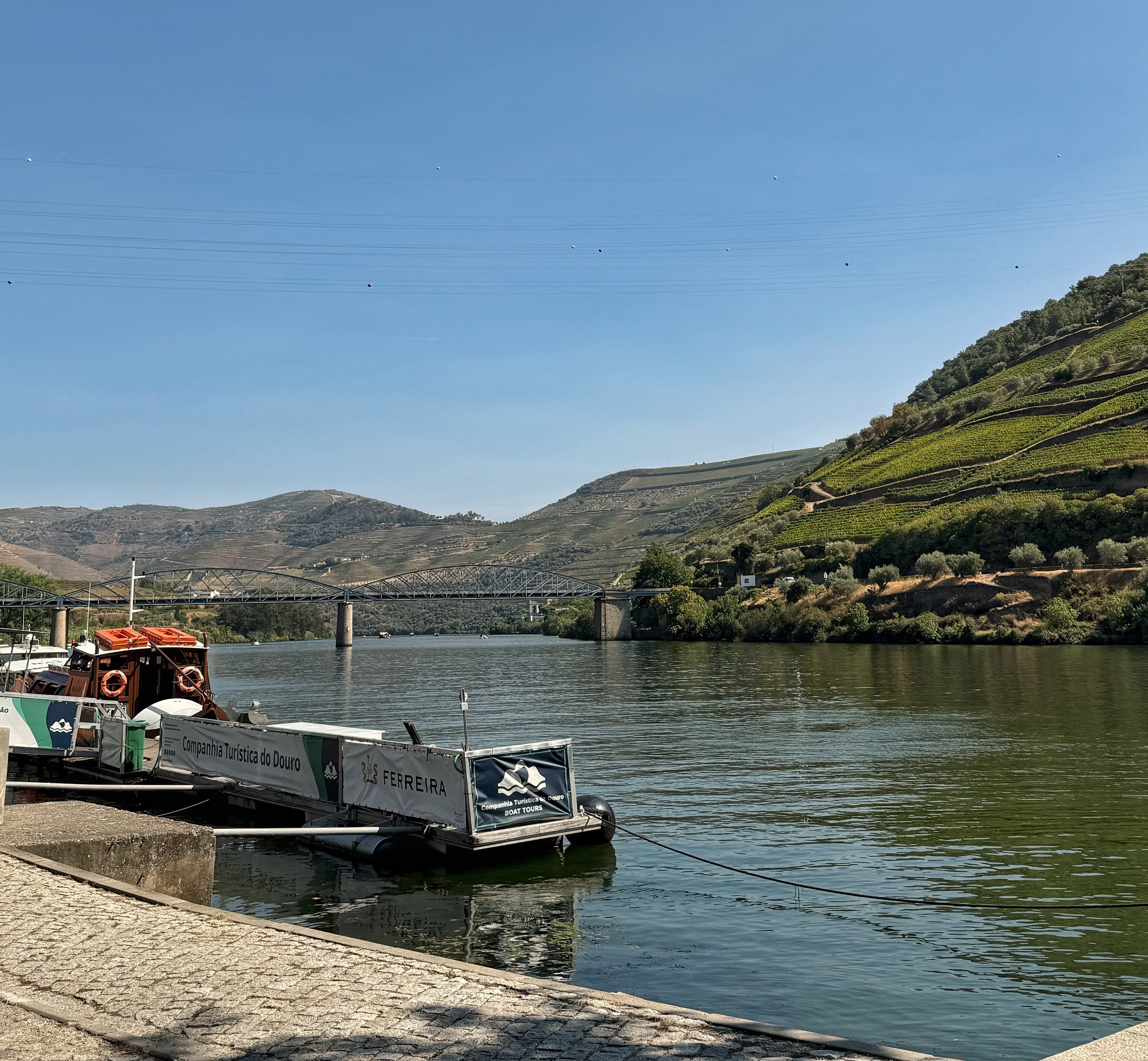
On the cruise, the other guests were speechlessly taking in the beauty. We knew we were onto something when the local seated next with an open book to us gave us the thumbs up. Naturally, we offered him a plastic cup.
We hopped back into the van for a scenic tour. Now, I know nothing screams tourists like stopping the car on the side of the road to take snapshots. But it was too beautiful to miss.
Fonseca’s Quinta do Panascal Estate
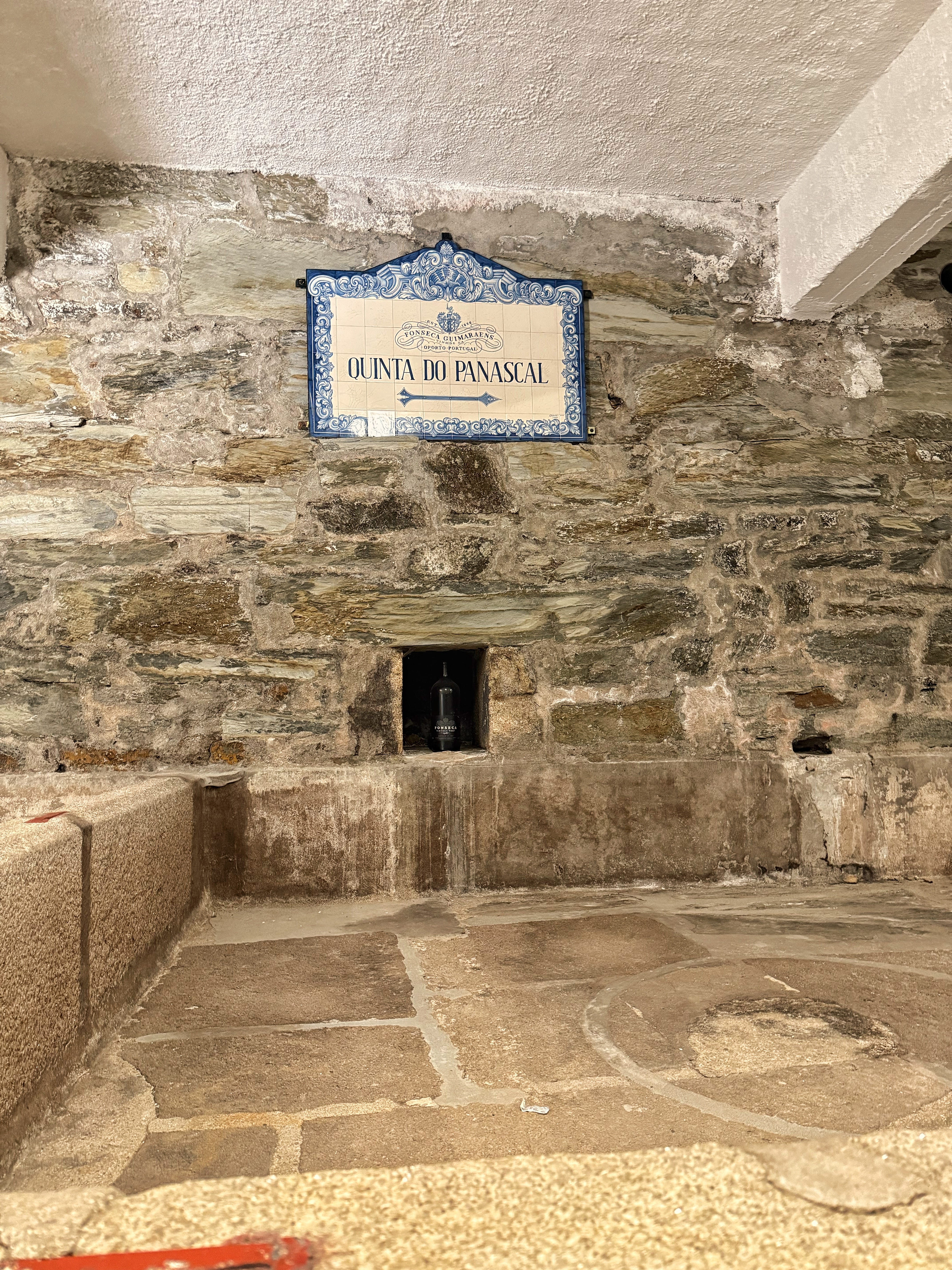
Our last stop was Fonseca’s Quinta do Panascal Estate, cultivated since the early 1800s. Fonseca exports billions of bottles a year across 270 acres, earning €7,000 a day from tours like ours.
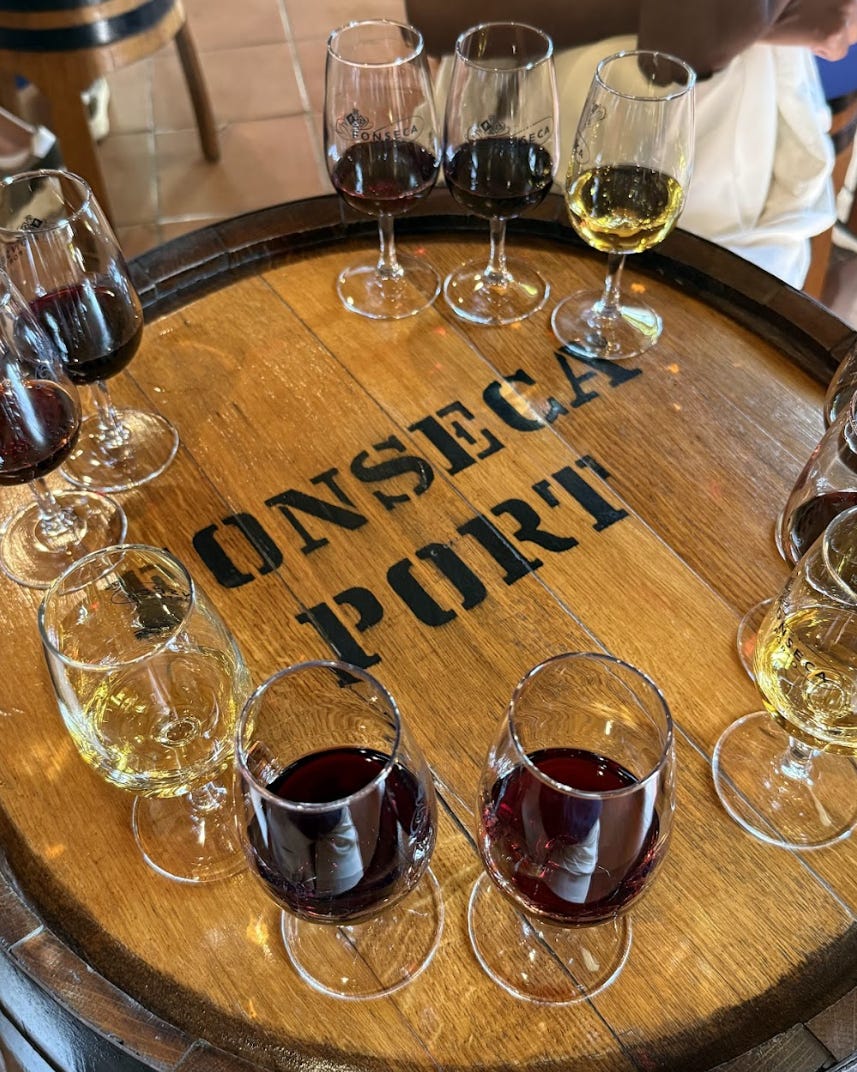
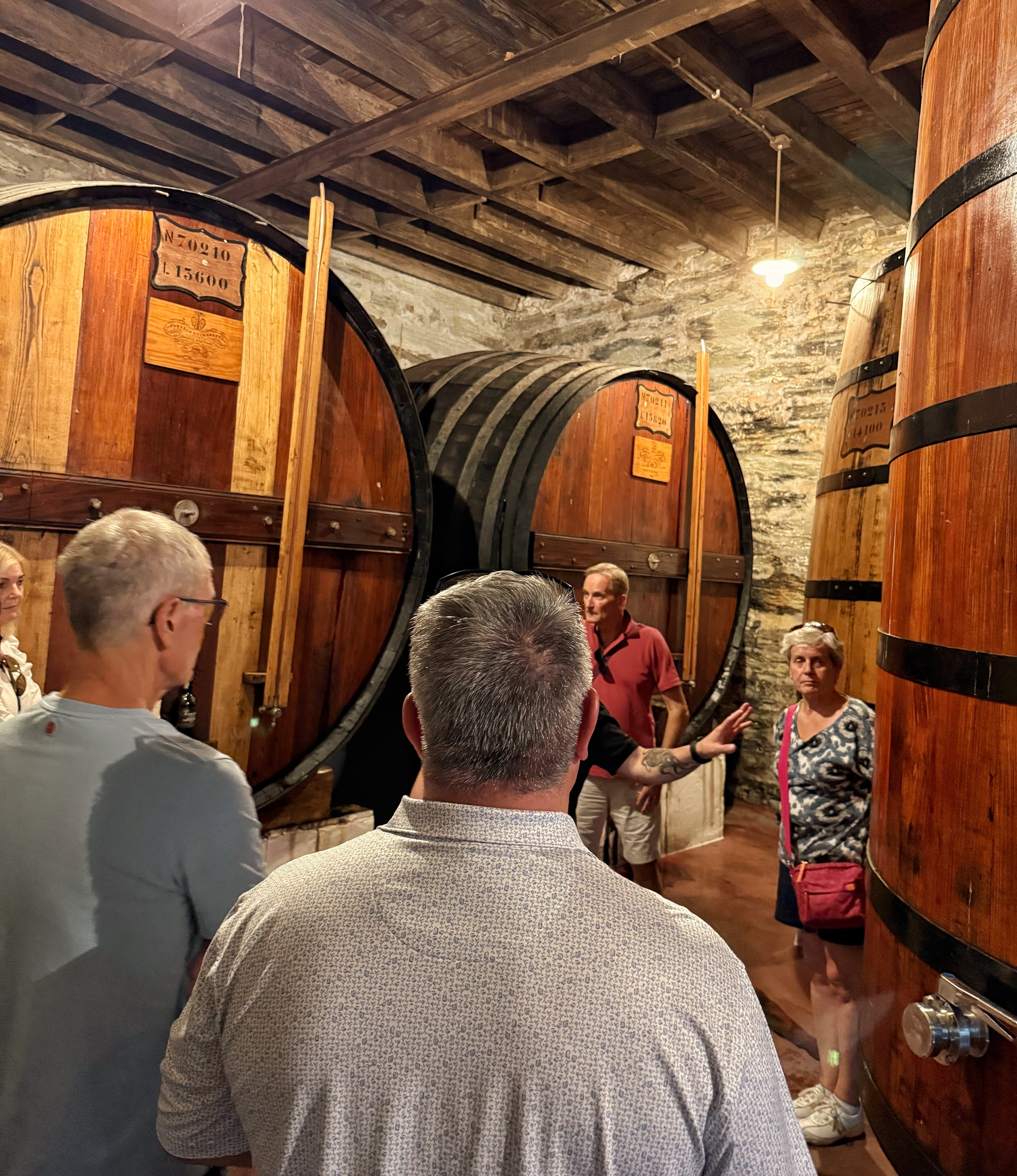
Inside, we walked through the vineyard’s literal stomping grounds and a room of towering barrels. All port was rested in French oak (maybe mahogany). Then, the barrels were shipped off to the distilleries across America, Ireland, and Scotland to share the oak and vanilla notes one more time. I couldn’t possibly type all of the history into my Notes app. Just know I didn’t want this knowledge to go to waste.
By the time we piled back into the van, the valley was golden, Rui was rattling off Porto recommendations, and our little group felt like something closer to a dinner party than a tour.
When You Go
We booked this TripAdvisor small-group tour and highly, highly recommend it! It covers a stop in a small town, two wineries, lunch, and a river cruise. Bring cash/card for coffee and pastries, and definitely take Rui’s advice about smuggling a bottle onto the boat.
How Port is Made (and the History Behind It)
Like most great stories, Port wine started as a little bit of war, a little bit of economics, and a whole lot of branding.
A lot of people argue that the British invented port. But don’t get it twisted. Wine has been made in the region dating back to the Roman Empire. All the British did was a bit of a rebrand and finding the right market.
When England and France were at each other’s throats in the 1600s, importing French wine (claret) was basically off the table. Luckily, Charles II married Catherine of Braganza, a Portuguese princess and the solution to England’s wine problem was set in stone (or at least bottled).
Since Portuguese wine wasn’t on the map yet, British (or Scottish) merchants stepped in. By adding brandy mid-fermentation, they preserved sugar, boosted the alcohol, and turned everyday red into something sweet, strong, and shelf-stable. Aka they concocted the sweet, wine we know and love today. Port from Oporto.
In other words: Port was one of the biggest marketing revivals in history.
A Little About The Land
At first glance, the Douro Valley could pass for rice country. Row after row of terraces climb the slopes. But instead of pools of water, it’s vines clinging to stone. A marvel of human engineering, yes, but also a reminder that this land doesn’t make it easy.
Throughout our trip, we kept hearing about the dreaded earthquake of 1755 — the quake/tsunami/fire that swept from Lisbon and shook the Douro along with it. Even without disasters, the valley is no gentle garden. For six months of the year, there isn’t a drop of rain. The walls are granite, the soil mostly shale… great at trapping heat, useless at holding water. Grapes survive by digging deep, roots pushing vertically through stone. Farmers only irrigate every other year, forcing the vines to build resilience.
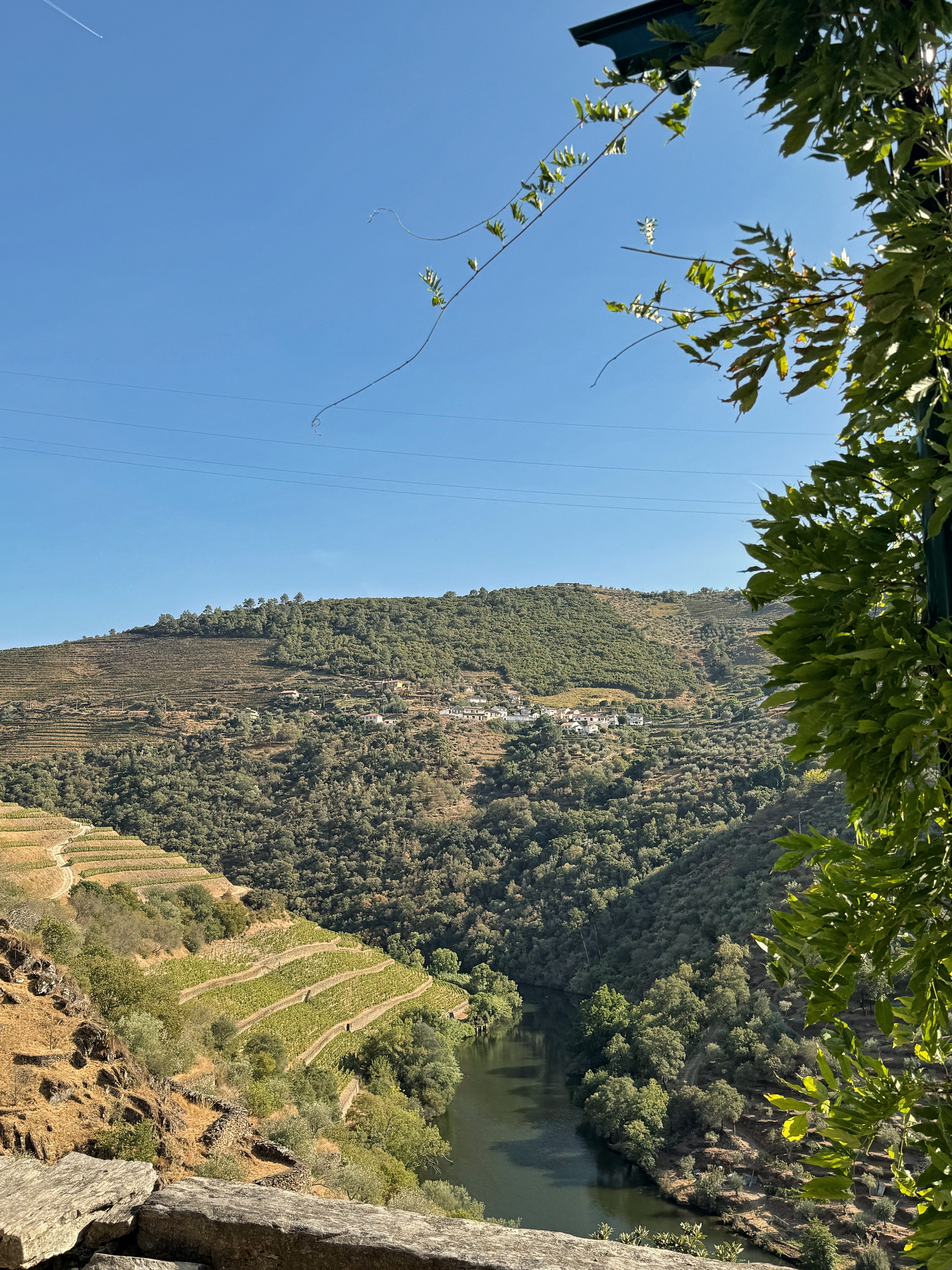
And yet, somehow, what should be a desert has become a market garden. Between the rows of grape vines, legumes restore nitrogen. Olive trees thrive alongside them, reinforcing the old tale, “What grows together, goes together [in a meal]”. But more on that later. Oranges, vegetables, cork, and wine all grow here in abundance. It’s a tribute to the farmers who have learned to work with the land instead of against it.
That’s why the Douro is now a UNESCO World Heritage site: not just for its beauty, but as proof that humans can turn stone into terraces, and terraces into wine. Sounds like my kind of miracle.
How the Marketing Miracle is Made
Today, grapes are still picked by hand and often crushed by foot, though modern technology helps too.
Then, Port’s signature move comes into play. Stopping fermentation early. Normally, yeast would keep eating sugar until the wine runs dry. But in Port, growers wait for the right moment (usually 9–15 weeks in), they add about one part brandy to four parts wine. The yeast is knocked out cold, leaving sugar behind. That’s why Port is both strong and sweet.
At Fonseca, they joked that wine is “77% water,” but what stuck with me was how much of Port’s character comes from what happens after fermentation. Most Port rests in French oak barrels, maybe mahogany (minus rosé). Once they’ve lived their life, they’re shipped off to bourbon makers in the U.S. and whiskey distillers in Scotland. Proof the Douro flavors ripple far beyond Portugal.
I know, the process sounds a bit *technical*. But it’s because it is. Wine making is like a historical science experiment. Port is not just make. It’s engineered, timed, and coaxed into existence.
What’s a Vintage?
Most wines are bottled every year, no questions asked. Port vintage is bit different. Harder to come by and often misunderstood. I used to make the mistake that vintage = “old.” But this trip taught me that vintage = “timeless”. The best of the best!
A vintage is only declared when everything aligns: the weather, the vines, the fermentation. Sometimes it happens three times in a decade, sometimes not at all. The decision comes down to a blind tasting by the Port shippers, and it has to be unanimous. Our guide, Rui, joked that if there’s a lone holdout… they’re is “usually from Lisbon” (the Porto vs. Lisbon rivalry is alive and well). He sweaaarrss he was joking.
Once declared, the wine rests for two years before bottling — still inky, purple, and powerful. Vintage Ports can age for decades, treated by collectors as liquid time capsules. The rest of the Port family may be delicious, but vintage is the crown jewel.
There are already high hopes that 2024 will be declared a vintage year. Fingers crossed, but the final call won’t come for a few years.
Your Port Cheat Sheet (Port Pairings + Practical Tips)
Vino Verde
Portuguese, high-acid, light-bodied, very dry, semi-sparkling, white wine
Don’t let the “verde” turn you off from trying my new favorite white. It’s not green, just green grapes. If you love Spanish Albariño, this is basically her Portuguese cousin with a different branding team. Pair with seafood, especially grilled sardines.
Port
Portuguese fortified sweeter wine from Oporto
Usually red, sometimes white. Fortified = sweet, strong, unforgettable. Pair it two ways:
Contrast: with funky blue cheese (Stilton if you’re feeling posh, Roquefort or Gorgonzola if you’re not).
Double down: with bittersweet chocolate or chocolate desserts. Remember my chef’s kiss tawny + chocolate lunch? Exactly that. Smoked or red meats also play well here.
And don’t sleep on white port. It’s been around for centuries, but lately it’s making a comeback as an aperitif (especially mixed into a Port Tonic)!
Ruby
Portuguese young, red, nonvintage Port
Young, fruity, bottled early. She might be the least popular gal at the prom, but she is still best companions with berry and cherry desserts.
Tawny
Nonvintage red port, aged in wood barrel
Aged in wood barrels, mellow and nutty. She shines with dark chocolate, dried fruit, and nut desserts. Seasonal bonus: pear tart, pumpkin pie, or pecan pie :)
Vintage
A blend of red port grapes from a year declared a vintage year
Only declared in exceptional years. Rich, powerful, collector-worthy. If you can get your hands on it, Late Bottled Vintage (LBV) is even richer as it’s put 6-8 years in the barrels and then bottled. If you’ve got the good stuff, treat it right: pair with Stilton, walnut bread, or (of course) chocolate.
Verdelho
Portuguese dry medium-bodied white wine
This white is very versatile. Think grilled white fish, roasted veggies, or pesto pasta. Simple, elegant, doesn’t need to shout.
Port Tonic
Porto’s cocktail to get the youngers obsessed with wine
Instead of a gin an tonic, you can expect a Port Tonic with dry white port and homemade tonic. Pairs with any appetizer, from olives to fried calamari.
Where to Find Authentic Port from Douro
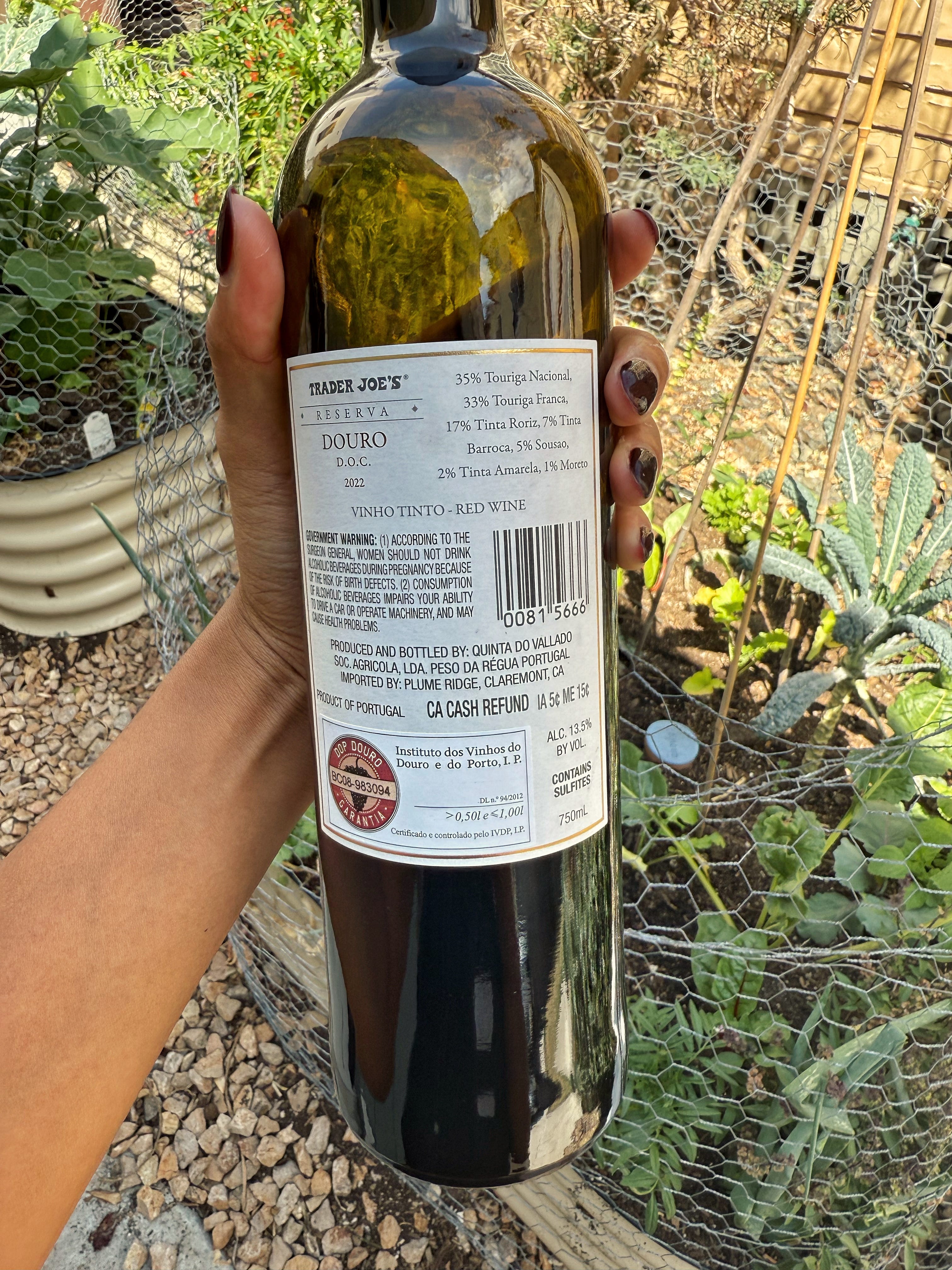
Once the vacation ends and you’re trying to recreate your Douro experience at home, know you can find the real deal when the white DOC label is on your bottle. That little seal means Denominação de Origem Controlada. It’s like a stamp that proves the port passes the high-quality test AND it came from the Douro Valley.
Save for Later: 4 Easy Pairings at Home
Sweet + Funky (Port) → Blue cheese + port = magic. Stilton if you’re fancy, any funky wedge if you’re not.
Sweet + Sweet (Port) → Dark chocolate or a chocolate tart. Always a yes.
Sweet + Nutty (Tawny / Vintage) → Walnuts, pecan pie, or pumpkin pie. Perfect for fall.
Fresh + Salty (Vinho Verde) → Grilled sardines, steamed mussels, or whatever seafood you can throw on a pan.
Some people study wine, others just drink it, here’s my attempt to do both. After our trip the Douro, I feel molded by the land and hope I’ll revisit one day. And if I don’t, I’ll at least pair it with something good back home.
The Douro reminded me that Port isn’t just something sweet at the end of dinner… it’s a sense of place, the legacy of trade deals and marketing, and centuries of hand-picked, foot stomped fermentation bottled up.
So here’s my toast: drink with curiosity, live with gratitude, and remember… some hills are worth dying on. The Douro is one of them.
🤎 Cam